
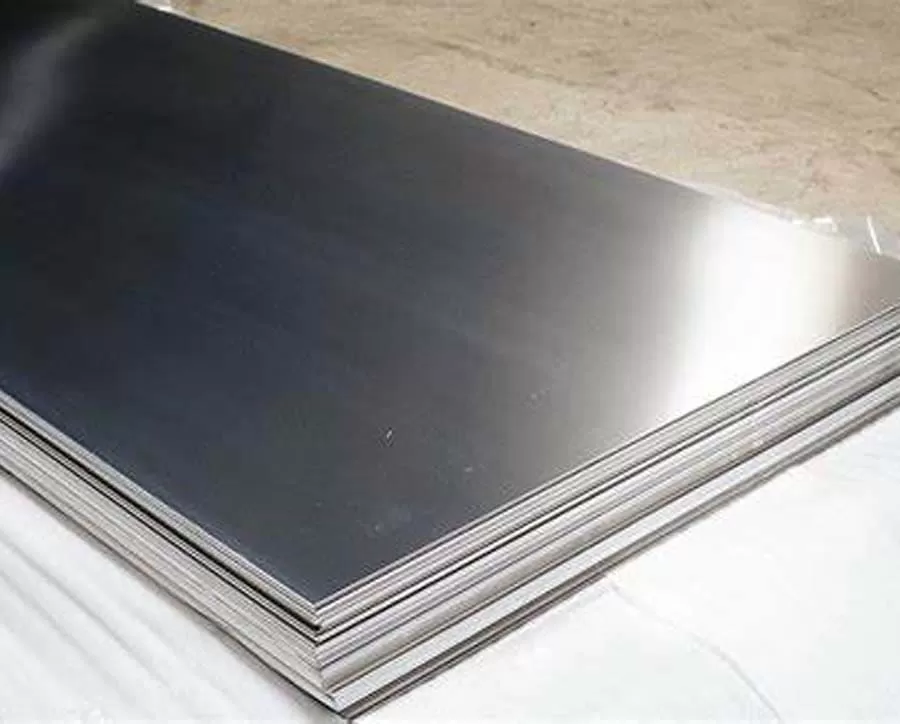
405 Stainless steel is a cornerstone material in modern engineering, manufacturing, and construction due to its durability, corrosion resistance, and versatility. Among the many stainless steel grades available, ferritic stainless steels occupy a unique position for applications requiring moderate corrosion resistance, magnetic properties, and cost efficiency. One such grade is 405 stainless steel, a specialized ferritic alloy designed primarily for high-temperature and welded applications.
405 stainless steel is widely valued for its excellent oxidation resistance, stability during welding, and ability to perform reliably in elevated-temperature environments. Unlike more commonly known austenitic grades such as 304 or 316, this grade contains aluminum, which plays a crucial role in enhancing its resistance to scaling and oxidation. As a result, it is often selected for applications where thermal exposure and fabrication efficiency are key considerations.
This article provides an in-depth, practical, and SEO-optimized exploration of 405 stainless steel. It covers its composition, properties, fabrication behavior, applications, advantages, limitations, and comparisons with other stainless steel grades. Whether you are an engineer, buyer, fabricator, or technical writer, this guide will help you understand when and why 405 stainless steel is the right material choice.
Understanding 405 Stainless Steel
405 stainless steel is classified as a ferritic stainless steel, meaning it has a body-centered cubic (BCC) crystal structure and contains chromium as its primary alloying element. Unlike martensitic or austenitic grades, ferritic stainless steels do not harden through heat treatment and are naturally magnetic. Grade 405 typically contains around 11.5–14.5% chromium, which provides its base corrosion resistance and oxidation stability.
A defining feature of 405 stainless steel is the intentional addition of aluminum. This element significantly improves oxidation resistance, especially at elevated temperatures, and helps prevent excessive scaling. Aluminum also stabilizes the ferritic structure, making the alloy particularly suitable for welded assemblies where grain growth and cracking can be concerns. This makes 405 stainless steel a preferred choice for applications involving repeated heating and cooling cycles.
Because of its composition, 405 stainless steel offers a balance between performance and cost. It does not contain expensive nickel, keeping material costs lower than austenitic grades. At the same time, it provides adequate corrosion resistance for mildly corrosive environments, making it suitable for many industrial and automotive uses.
Physical and Mechanical Properties
The mechanical properties of 405 stainless steel make it suitable for structural and fabricated components rather than high-strength or highly ductile applications. It offers moderate tensile and yield strength, with good dimensional stability under thermal stress. While it does not match the toughness or formability of austenitic stainless steels, it performs reliably in applications where extreme deformation is not required.
From a physical standpoint, 405 stainless steel is magnetic, which can be advantageous in certain industrial and electrical applications. It has a relatively high thermal conductivity compared to austenitic grades, allowing it to dissipate heat efficiently. This property contributes to its excellent performance in heat exchangers, furnace parts, and exhaust system components.
The alloy also exhibits good resistance to thermal fatigue, meaning it can withstand repeated heating and cooling without significant degradation. Its melting point and density are comparable to other ferritic stainless steels, making it easy to integrate into existing manufacturing processes. These combined physical and mechanical characteristics explain why 405 stainless steel is often selected for high-temperature and welded components.
Corrosion and Oxidation Resistance
Corrosion resistance is one of the primary considerations when selecting any stainless steel grade. 405 stainless steel offers moderate corrosion resistance, suitable for mildly corrosive environments such as atmospheric exposure, dry gases, and some industrial settings. Its chromium content forms a protective oxide layer that helps resist rust and surface degradation.
Where 405 stainless steel truly excels is oxidation resistance at elevated temperatures. The addition of aluminum significantly enhances its ability to resist scaling when exposed to heat. This makes it particularly effective in applications such as exhaust manifolds, furnace parts, and heat shields, where continuous or cyclic high-temperature exposure is common.
However, it is important to note the limitations of this grade. 405 stainless steel is not recommended for highly corrosive environments, such as those containing chlorides, acids, or marine exposure. In such cases, austenitic or duplex stainless steels offer superior corrosion resistance. Understanding these strengths and limitations is critical to selecting the right material for long-term performance.
Fabrication and Weldability
One of the standout advantages of 405 stainless steel is its excellent weldability. Unlike many ferritic grades that can suffer from grain growth and cracking in the heat-affected zone, 405 stainless steel remains stable due to its aluminum content. This makes it especially suitable for welded assemblies and complex fabrications.
During forming and machining, 405 stainless steel behaves predictably but requires proper tooling and process control. It can be cold-formed for simple shapes, though it is less ductile than austenitic grades. Machining is generally straightforward, but sharp tools and controlled speeds are recommended to maintain surface quality and dimensional accuracy.
Welding processes such as TIG, MIG, and resistance welding are commonly used with 405 stainless steel. Preheating is usually not required, and post-weld heat treatment is often unnecessary for many applications. This ease of fabrication reduces production time and cost, making the alloy attractive for high-volume industrial manufacturing.
Heat Treatment and Processing
405 stainless steel does not harden through traditional heat treatment methods, but annealing is commonly used to relieve stress and improve ductility after cold working. Annealing typically involves heating the material to a controlled temperature followed by air cooling, which helps restore its original properties.
Stress relieving may also be applied after welding or forming to reduce residual stresses and enhance dimensional stability. Because of its ferritic structure, the alloy maintains good resistance to distortion during thermal processing. Surface finishing options such as pickling, polishing, or coating can further improve corrosion resistance and appearance.
Proper heat treatment and processing ensure consistent performance, particularly in applications involving thermal cycling. These practices help maximize the lifespan and reliability of components made from 405 stainless steel.
Applications of 405 Stainless Steel
405 stainless steel is widely used across industries where heat resistance, weldability, and cost efficiency are essential. In the automotive sector, it is commonly found in exhaust systems, manifolds, and heat shields due to its oxidation resistance and thermal stability.
Industrial applications include furnace components, heat exchangers, and structural parts exposed to elevated temperatures. The alloy is also used in power generation equipment, petrochemical processing, and fabricated assemblies requiring extensive welding. Its magnetic properties can be advantageous in certain mechanical and electrical applications.
Because it is available in various product forms such as sheet, plate, and bar, 405 stainless steel can be easily adapted to different design requirements. Its versatility continues to make it a reliable choice for engineers and manufacturers worldwide.
Comparison with Other Stainless Steel Grades
When compared to 410 stainless steel, 405 offers better weldability and oxidation resistance but lower hardness and strength. Compared to 430 stainless steel, grade 405 provides improved high-temperature performance due to aluminum addition, though 430 may offer slightly better general corrosion resistance in some environments.
The choice between these grades depends on application requirements such as temperature exposure, fabrication needs, and corrosion conditions. 405 stainless steel stands out when welding and thermal stability are primary concerns.
Advantages and Limitations
The key advantages of 405 stainless steel include excellent oxidation resistance, good weldability, cost-effectiveness, and magnetic properties. Its limitations include lower corrosion resistance compared to austenitic grades and reduced toughness at low temperatures. Understanding both aspects ensures optimal material selection.
Conclusion
405 stainless steel is a specialized ferritic alloy designed for high-temperature, welded, and cost-sensitive applications. Its unique aluminum-enhanced composition provides excellent oxidation resistance and fabrication stability. While it may not suit highly corrosive environments, it excels where thermal performance and manufacturing efficiency are critical. For many industrial and automotive uses, 405 stainless steel remains a dependable and economical material choice.
Frequently Asked Questions
What makes 405 stainless steel unique?
Its aluminum content improves oxidation resistance and weldability.
Is 405 stainless steel magnetic?
Yes, it is fully magnetic due to its ferritic structure.
Can 405 stainless steel be welded easily?
Yes, it is one of the most weld-friendly ferritic stainless steels.
Where is 405 stainless steel commonly used?
Automotive exhaust systems, furnaces, heat exchangers, and industrial components.
How does 405 stainless steel perform at high temperatures?
It offers excellent oxidation resistance and thermal stability.
Is 405 stainless steel corrosion resistant?
It has moderate corrosion resistance suitable for mild environments.
How does it compare to 430 stainless steel?
405 performs better at high temperatures, while 430 may offer slightly better general corrosion resistance.
Also Read: Onet Sport