
Electricity is one of the most powerful forces shaping modern life, yet many people still ask a simple but fascinating question: Who Invented Electricity? From lighting homes and running factories to powering smartphones and hospitals, electricity is everywhere. Because it feels so essential and engineered, it is natural to assume that one brilliant mind invented it at a specific moment in history. However, the real story is far more complex and much more interesting.
The truth is that Who Invented Electricity is not a question with a single-name answer. Electricity is a natural phenomenon that humans gradually discovered, studied, and learned to control over thousands of years. Many scientists across different civilizations contributed ideas, experiments, and inventions that eventually led to the electrical systems we rely on today. Understanding this journey helps us appreciate electricity not as a sudden invention, but as a shared achievement of human curiosity and science.
What Is Electricity and Where Did It Come From?
Before answering Who Invented Electricity, it is important to understand what electricity actually is. Electricity is a form of energy produced by the movement of electric charges, usually electrons. These charges exist naturally in atoms, meaning electricity has always been part of the universe. Humans did not create electricity; they discovered how it behaves and how to use it.
Natural forms of electricity have been observed since ancient times. Lightning, static shocks, and even electric fish are examples of electrical phenomena found in nature. Early humans experienced these effects without understanding their cause. Over time, observation turned into experimentation, and experimentation turned into scientific knowledge. This gradual process explains why electricity cannot be credited to a single inventor.
Early Discoveries and the Question: Who Invented Electricity?
When people ask Who Invented Electricity, they often overlook ancient contributions. As early as 600 BCE, the Greek philosopher Thales of Miletus noticed that rubbed amber could attract small objects. This was one of the first recorded observations of static electricity. Although Thales did not know why it happened, his curiosity marked an important starting point.
Other ancient civilizations also encountered electricity in different forms. Egyptians documented electric shocks from certain fish, while early Chinese and Arabic scholars studied magnetism, which later became closely linked to electricity. These early discoveries did not result in practical electrical systems, but they laid the foundation for future scientific breakthroughs.
Scientists Who Shaped the Discovery of Electricity
The question Who Invented Electricity becomes clearer when we look at key scientists. In the 16th century, William Gilbert conducted systematic studies on magnetism and electricity, introducing the term electricus. His work separated scientific study from myth and superstition.
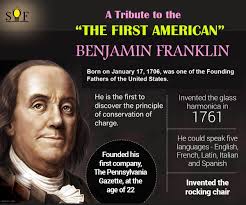
Benjamin Franklin later proved that lightning is electrical through his famous kite experiment, while Alessandro Volta invented the first electric battery, making continuous electric current possible. Michael Faraday discovered electromagnetic induction, which led to electric generators, and Nikola Tesla revolutionized power distribution with alternating current. Each of these figures played a vital role, but none alone invented electricity.
How Electricity Became Part of Everyday Life
Another way to approach Who Invented Electricity is by examining how electricity became useful to society. Early experiments produced sparks and shocks, but they were not practical. The invention of batteries, generators, and power grids allowed electricity to be produced and distributed on a large scale.
During the Industrial Revolution, electricity transformed factories, transportation, and communication. Homes gained electric lighting, cities developed power stations, and industries became more efficient. Electricity shifted from a scientific curiosity to a public utility, changing daily life forever.
Modern Understanding of Electricity
Today, science provides detailed explanations of electricity using atomic theory and electromagnetism. Even now, people still search for answers to Who Invented Electricity, showing how powerful and mysterious it remains in the public imagination. Modern technology—from renewable energy to artificial intelligence—depends entirely on electrical systems.
Research continues into better energy storage, wireless power transmission, and sustainable electricity generation. This ongoing progress proves that electricity is not a finished story but an evolving field of discovery and innovation.
Common Myths About Electricity
One major myth is that Benjamin Franklin invented electricity. While his work was groundbreaking, it did not answer Who Invented Electricity in a literal sense. He helped explain and control electricity but did not create it.
Another misconception is that electricity appeared suddenly in modern times. In reality, it developed gradually through centuries of shared knowledge. Clearing up these myths helps us understand electricity as a collective human achievement rather than a single invention.
Conclusion
So, Who Invented Electricity? The most accurate answer is that no single person did. Electricity is a natural force that humans learned to understand through observation, experimentation, and innovation. From ancient philosophers to modern engineers, countless individuals contributed to unlocking its power.
Electricity represents the strength of human collaboration and curiosity. Its discovery changed the world and continues to shape the future, proving that the greatest breakthroughs often come not from one mind, but from many working across generations.
Frequently Asked Questions
Who Invented Electricity?
No one person invented electricity; it was discovered and developed over time by many scientists.
Why do people ask Who Invented Electricity so often?
Because electricity feels like a man-made invention, even though it is a natural phenomenon.
Is Benjamin Franklin the inventor of electricity?
No, he proved that lightning is electricity but did not invent it.
Who invented the first electric battery?
Alessandro Volta invented the first battery in 1800.
Why is electricity considered a discovery, not an invention?
Because electricity existed in nature long before humans learned to use it.
Also Read: Chevy Equinox EV