
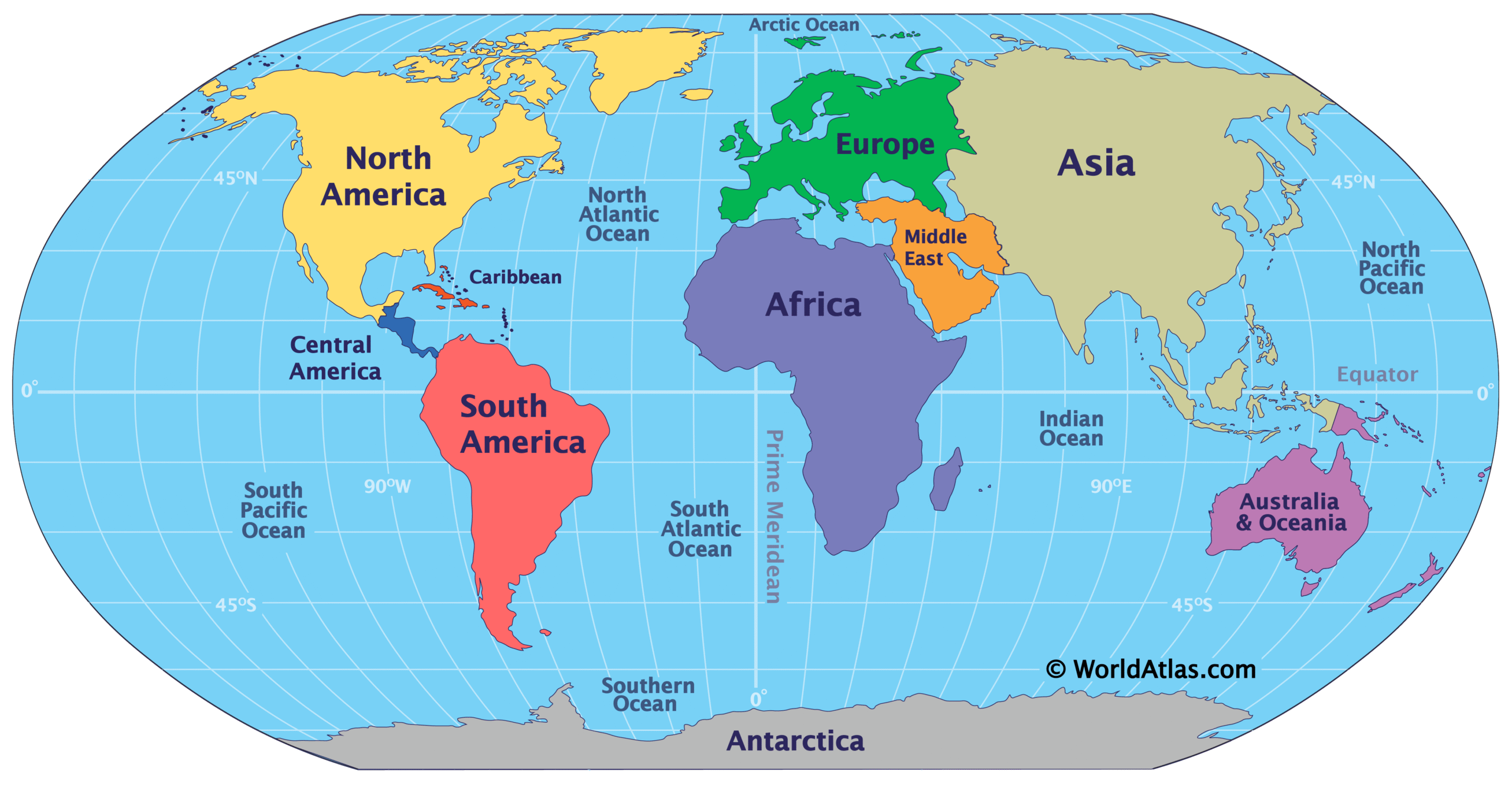
How Many Oceans Are There Earth is often called the “Blue Planet,” and for good reason. More than 70 percent of our planet’s surface is covered by vast bodies of saltwater that shape climates, support life, and connect continents. From space, the oceans dominate Earth’s appearance, forming a continuous blue network that influences nearly every natural system. Because oceans are so interconnected, many people naturally wonder: how many oceans are there?
This question may seem simple at first, but the answer has evolved over time. Depending on what you were taught in school, you may remember learning about four oceans, while modern geography now recognizes five. This difference has caused confusion among students, travelers, and even educators. Understanding why this change happened requires a closer look at what oceans actually are and how scientists classify them.
In this article, we will explore the definition of an ocean, explain how many oceans are there according to modern science, and take a detailed look at each of the world’s oceans. We will also discuss historical perspectives, common misconceptions, and why oceans are so important to life on Earth. By the end, you will have a clear, well-rounded understanding of Earth’s oceans and their global significance.
Understanding What an Ocean Is
To understand how many oceans are there, it is important to first define what an ocean actually is. An ocean is a massive, continuous body of saltwater that covers large areas of Earth’s surface and surrounds continents. Oceans are much larger and deeper than seas, and they play a crucial role in regulating global climate, supporting marine ecosystems, and driving weather patterns.
One common source of confusion comes from the difference between oceans and seas. Seas are smaller parts of oceans, usually partially enclosed by land. For example, the Mediterranean Sea is part of the Atlantic Ocean, and the Arabian Sea belongs to the Indian Ocean. While seas are important, they are not considered separate oceans because they do not function independently on a global scale.
Scientists classify oceans based on several factors, including size, water circulation, temperature patterns, and surrounding landmasses. Ocean currents, which move warm and cold water around the planet, are especially important in defining ocean boundaries. These currents influence climate systems and marine life, making them a key feature in ocean classification.
Tectonic plates and continental positions also play a role in how oceans are defined. As continents shift over millions of years, ocean basins change shape and size. This dynamic nature of Earth helps explain why our understanding of oceans has evolved over time and why modern science recognizes a specific number of oceans today.
How Many Oceans Are There on Earth?
According to modern geography and oceanography, the correct answer to the question how many oceans are there is five. Today, scientists and international organizations recognize five distinct oceans based on physical, chemical, and biological characteristics. These five oceans are the Pacific, Atlantic, Indian, Southern, and Arctic Oceans.
For many years, people were taught that there were only four oceans. This older model included the Pacific, Atlantic, Indian, and Arctic Oceans. The Southern Ocean, which surrounds Antarctica, was not always recognized as a separate ocean. Instead, it was considered the southern portions of the Atlantic, Pacific, and Indian Oceans.
The recognition of the Southern Ocean as a distinct ocean is based on strong scientific evidence. It has unique currents, particularly the Antarctic Circumpolar Current, which flows uninterrupted around Antarctica. This current creates a natural boundary that separates the Southern Ocean from the other oceans and gives it distinct ecological and climatic properties.
International organizations such as the International Hydrographic Organization (IHO) have played a key role in standardizing ocean classification. While some educational systems still mention four oceans, the five-ocean model is now widely accepted in scientific and academic communities around the world.
The Five Oceans of the World
The Pacific Ocean is the largest and deepest ocean on Earth. It covers more surface area than all the land combined and stretches between Asia and Australia on one side and the Americas on the other. The Pacific Ocean is known for its vast size, deep trenches like the Mariana Trench, and incredible biodiversity. It plays a major role in global weather patterns, including phenomena such as El Niño and La Niña.
The Atlantic Ocean is the second-largest ocean and separates the Americas from Europe and Africa. It has been central to human history, serving as a major route for exploration, trade, and cultural exchange. The Atlantic Ocean is also known for powerful currents like the Gulf Stream, which helps regulate climate in Europe and North America.
The Indian Ocean lies between Africa, Asia, Australia, and the Southern Ocean. It is the warmest ocean in the world and strongly influences monsoon systems that affect millions of people. Rich in marine life and natural resources, the Indian Ocean has long been important for trade and cultural connections between regions.
The Southern Ocean, also called the Antarctic Ocean, surrounds Antarctica and is the newest recognized ocean. Its cold waters and unique currents play a vital role in regulating Earth’s climate by connecting the Atlantic, Pacific, and Indian Oceans. The Southern Ocean supports unique ecosystems adapted to extreme cold.
The Arctic Ocean is the smallest and shallowest ocean. Located around the North Pole, it is covered by ice for much of the year. Despite its size, the Arctic Ocean is crucial for regulating global temperatures and is especially sensitive to climate change.
Historical Views on the Number of Oceans
Historically, the idea of how many oceans are there has changed significantly. Ancient civilizations often viewed the ocean as a single, endless body of water surrounding the known world. Early Greek geographers referred to a great river-like ocean encircling Earth, rather than distinct oceans.
During the Age of Exploration, sailors and mapmakers began identifying separate oceans as they traveled across the globe. As continents were mapped more accurately, the Pacific, Atlantic, and Indian Oceans became clearly defined. The Arctic Ocean was later recognized due to exploration in polar regions.
For much of the 19th and 20th centuries, the four-ocean model was widely taught. The Southern Ocean was not officially named or recognized, even though scientists understood its unique properties. It was only with advances in oceanography and climate science that the importance of the Southern Ocean became undeniable.
Today’s five-ocean model reflects a more scientific understanding of Earth’s water systems. It highlights how knowledge evolves over time as technology and research methods improve.
Why There Is Confusion About the Number of Oceans
One major reason people still ask how many oceans are there is because educational systems differ across countries. Some textbooks and classrooms continue to teach the traditional four-ocean model, while others have adopted the modern five-ocean classification.
Another reason is that all oceans are connected, forming what some scientists call the “global ocean.” From this perspective, the division into separate oceans is mainly for convenience and study, rather than strict physical separation. This interconnectedness can make the idea of separate oceans feel artificial.
Media, maps, and online resources also contribute to confusion by using different terms or outdated information. As a result, people may encounter conflicting answers depending on their source.
Understanding that science evolves helps explain why there can be more than one answer depending on context. However, in modern geography, five oceans are the standard answer.
Importance of Oceans to Earth and Humanity
Oceans are essential to life on Earth. They regulate climate by absorbing heat and carbon dioxide, helping to stabilize global temperatures. Ocean currents distribute heat around the planet, influencing weather patterns and seasonal changes.
Marine ecosystems support an incredible diversity of life, from microscopic plankton to massive whales. Oceans also provide food, livelihoods, and economic opportunities for billions of people worldwide. Industries such as fishing, shipping, and tourism depend heavily on healthy oceans.
Culturally and historically, oceans have connected civilizations and enabled exploration. They continue to shape human societies today, making their study and protection more important than ever.
Conclusion
So, how many oceans are there? According to modern science and geography, there are five oceans: the Pacific, Atlantic, Indian, Southern, and Arctic Oceans. This classification reflects a deeper understanding of ocean currents, ecosystems, and global climate systems.
While older models recognized only four oceans, the inclusion of the Southern Ocean highlights how scientific knowledge evolves. Understanding Earth’s oceans helps us appreciate their importance and encourages responsible stewardship of these vital resources.
Frequently Asked Questions
How many oceans are there according to science?
Modern science recognizes five oceans.
Why do some books say there are only four oceans?
Older educational models did not include the Southern Ocean.
Is the Southern Ocean officially recognized?
Yes, it is widely recognized by scientific organizations.
What is the largest ocean on Earth?
The Pacific Ocean is the largest.
What is the smallest ocean in the world?
The Arctic Ocean is the smallest.
Are oceans connected to each other?
Yes, all oceans are connected, forming a global water system.
How are oceans different from seas?
Oceans are larger and deeper, while seas are smaller parts of oceans.
Also Read: Fun Facts About Jellyfish