
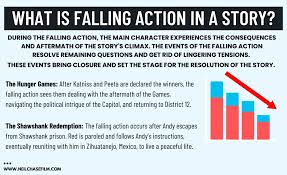
When learning plot structure, one of the most common questions students ask is what is the falling action and why it matters in storytelling. Every good story follows a logical sequence of events that guides readers from introduction to conclusion. The falling action is a critical part of this sequence because it connects the most intense moment of the story to its ending.
To clearly understand what is the falling action, it helps to see it as the stage where tension begins to decrease after the climax. The major conflict has already occurred, and now the story starts moving toward resolution. Without this stage, stories would feel rushed, confusing, or emotionally incomplete.
In this article, we will explore what is the falling action, how it fits into plot structure, why it is important, and how to identify it easily. This guide is written in simple English for students, teachers, and writers who want a clear and complete explanation.
Understanding Plot Structure Before Learning What Is the Falling Action
Before answering what is the falling action, it is important to understand basic plot structure. Plot structure refers to how events in a story are organized to create meaning and emotional impact. Most traditional stories follow a five-part structure known as Freytag’s Pyramid.
These five elements include exposition, rising action, climax, falling action, and resolution. Each part has a specific role. The exposition introduces characters and setting, while the rising action builds conflict and suspense. The climax is the turning point of the story where tension reaches its highest level.
Once the climax has occurred, the story naturally moves into the falling action. Understanding this sequence makes it much easier to identify what is the falling action in any story. It always comes after the climax and before the resolution, helping the story move smoothly toward the ending.
What Is the Falling Action? Clear Definition and Meaning
So, what is the falling action exactly? The falling action is the part of the plot that comes immediately after the climax and shows the results of the main conflict. During this stage, tension starts to decrease, and the story begins to wrap up unresolved issues.
To put it simply, what is the falling action can be explained as the “after-effect” of the climax. The biggest problem has already been faced, and now the characters deal with the consequences. This may include emotional reactions, explanations, final decisions, or minor conflicts being resolved.
Many students confuse falling action with resolution, but they are not the same. The falling action leads toward the ending, while the resolution is the actual ending. Understanding what is the falling action helps readers see how a story transitions naturally instead of ending abruptly.
Why Understanding What Is the Falling Action Is Important
Knowing what is the falling action is important for both readers and writers. For readers, it improves comprehension and literary analysis. When students can correctly identify falling action, they perform better in exams, essays, and class discussions.
For writers, understanding what is the falling action helps create well-structured and satisfying stories. A strong falling action allows readers to emotionally process what happened during the climax. It also gives characters space to grow, reflect, and change based on the events they experienced.
Without falling action, a story can feel incomplete. Readers may feel confused or disconnected if the story jumps directly from climax to resolution. That is why learning what is the falling action is essential in storytelling.
Examples That Explain What Is the Falling Action
One of the easiest ways to understand what is the falling action is through examples. In a mystery story, the climax might be the moment when the criminal is caught. The falling action would then show how the detective explains the mystery and how justice is served.
In a novel, the falling action may include scenes where characters return home, repair relationships, or deal with loss. These moments help readers understand the emotional impact of the climax. This clearly demonstrates what is the falling action in longer stories.
In plays and dramas, falling action often appears through dialogue. Characters discuss what has happened and what will happen next. These scenes reduce tension and prepare the audience for the final resolution.
Falling Action vs Other Plot Elements
To fully understand what is the falling action, it is important to compare it with other plot elements. Rising action increases tension, while falling action decreases it. One builds the conflict, and the other begins resolving it.
The resolution, however, is different. While falling action explains and transitions, the resolution provides final closure. Understanding these differences helps avoid confusion and strengthens literary analysis skills.
A plot diagram is often helpful here. The falling action appears on the downward slope after the climax, visually showing how tension falls as the story approaches its ending.
How to Identify What Is the Falling Action in Any Story
Identifying what is the falling action becomes easier with practice. First, locate the climax of the story. Then look at what happens immediately after. If the events show consequences, explanations, or emotional reactions, you are likely reading the falling action.
Another sign is a slower pace. Action scenes usually decrease, and reflection increases. This shift in tone is a strong indicator of what is the falling action.
Students should practice identifying falling action in short stories, novels, and movies. Over time, recognizing what is the falling action becomes automatic.
Conclusion: Final Thoughts on What Is the Falling Action
In conclusion, understanding what is the falling action is essential for mastering plot structure. It is the stage where tension decreases, conflicts begin to resolve, and the story moves toward closure. Without it, stories would feel rushed and incomplete.
Whether you are a student analyzing literature or a writer crafting your own story, knowing what is the falling action will greatly improve your skills. It brings balance, clarity, and emotional depth to storytelling.
FAQs About What Is the Falling Action
What is the falling action in simple words?
The falling action is what happens after the climax and before the ending.
Why is falling action important?
It helps resolve conflicts and prepares the reader for the resolution.
Can a story exist without falling action?
Very short or experimental stories may skip it, but most stories need it.
What comes after the falling action?
The resolution or denouement comes after the falling action.
How do exams ask questions about falling action?
Students are often asked to identify or explain what is the falling action in a given story.
Also Read: 405 Stainless Steel